
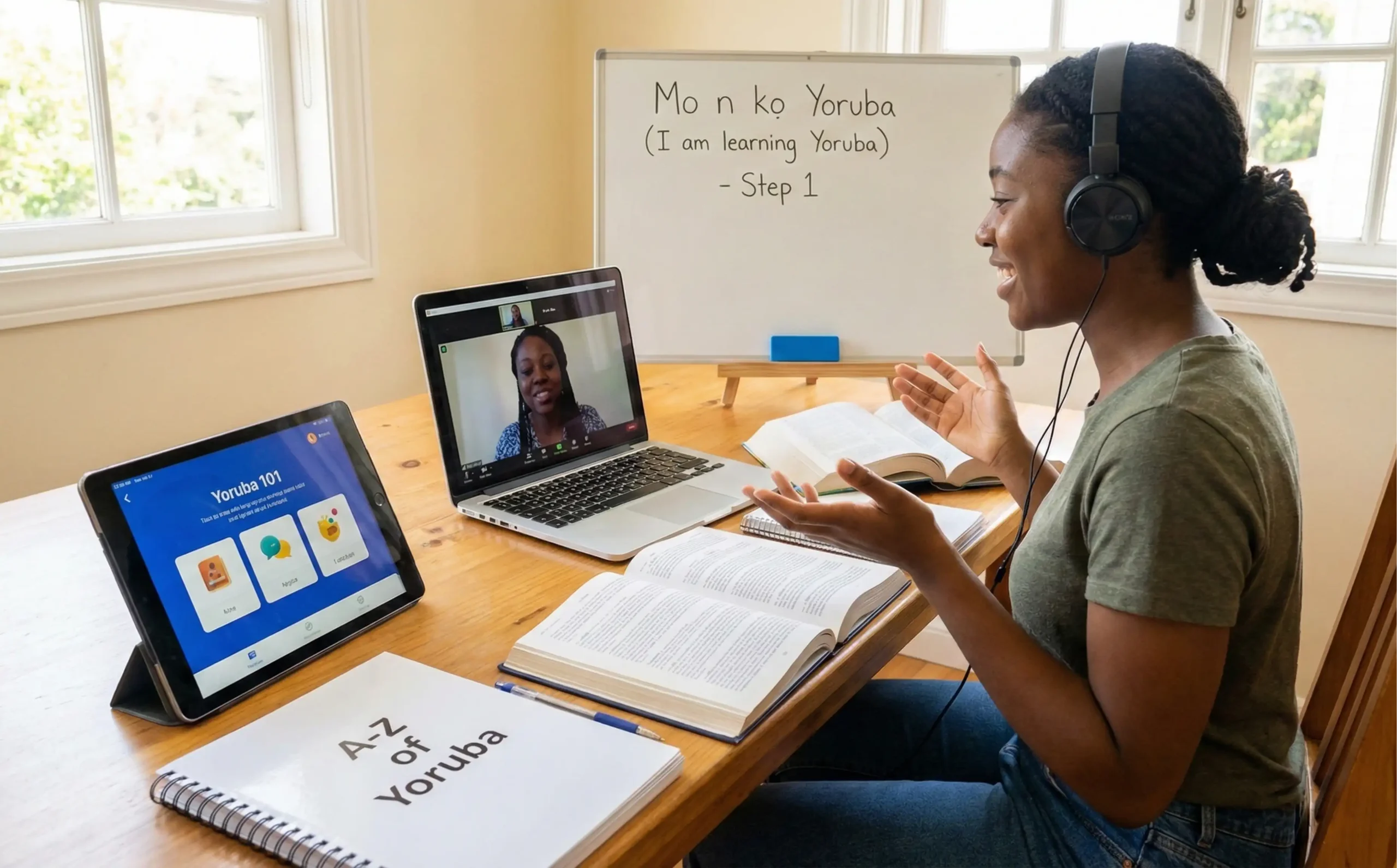
Learning Yoruba as a second language is one of the most beautiful decisions you can make, but it can also feel confusing if you don’t know where to start. Many people try, get overwhelmed, then give up. Not because Yoruba is too hard, but because they followed the wrong path.
Yoruba is not just something you cram in your head. It is something you grow into. This guide will walk you through the right way to learn Yoruba, step by step, in a way that actually works.
This is how many native speakers and successful learners approach it.
Before you start learning words, understand the nature of the language.
Yoruba is a tonal language. This means the tone of a word changes its meaning. Yoruba is also deeply connected to culture, respect, and context.
If you treat Yoruba like English, you will struggle. If you respect it for what it is, learning becomes easier.
At this stage, don’t worry about speaking perfectly. Just understand that Yoruba is:
This mindset will save you stress later.
Many learners make the mistake of forcing themselves to speak immediately. That usually leads to wrong tones and bad habits.
Instead, begin with listening.
Listen to:
Your ears need time to adjust to the tones. Yoruba tones are like music. The more you listen, the more natural it becomes.
At this stage:
Listening builds a strong foundation.
Greetings are the heart of Yoruba communication. If you master greetings, you will already sound polite and culturally aware.
Start with:
Yoruba people greet a lot, and greeting well opens doors. Even if your grammar is not perfect, good greetings earn respect.
Focus on:
This stage helps you feel confident early.
This is where many learners struggle, but it doesn’t have to be hard.
Yoruba has three main tones:
Instead of memorizing tone rules, learn them through examples. Hear how words sound in real sentences. Repeat them slowly.
A good habit:
Do not rush this stage. Correct tone early saves you from relearning later.
You don’t need heavy grammar to start speaking Yoruba.
Begin with:
For example:
Speak short sentences confidently instead of long sentences incorrectly.
Fluency grows from clarity, not complexity.
This step is very important.
Yoruba language makes more sense when you understand Yoruba culture. Learn about:
Culture explains why certain words are used and when silence is better than speech.
Once you understand culture, you stop translating Yoruba in your head. You start thinking in Yoruba.
Many learners know Yoruba but are afraid to speak. Fear slows progress.
Find safe places to practice:
Speak without fear of mistakes. Yoruba people appreciate effort, especially when you show respect.
Mistakes are part of learning. Silence is the real enemy.
You don’t need to know hundreds of proverbs. Start small.
Learn:
Proverbs help you sound natural and understand deeper conversations. They also teach wisdom and cultural values.
At first, just understand the meaning. Using them will come naturally later.
Reading helps you connect sounds to written words.
Start with:
If tone marks confuse you, don’t panic. Focus on recognition, not perfection.
Reading improves:
Even ten minutes a day makes a difference.
This is the most important step.
You don’t need to study for hours every day. You need consistency.
A good routine:
Language learning is like farming. Small effort, done consistently, brings harvest.
Many learners struggle because they:
Avoid these, and your progress will be steady.
Some people believe Yoruba is harder to learn as an adult. That is not true.
Adults actually learn faster because they understand patterns, meanings, and context. What adults need is the right method, not talent.
With the right guidance, Yoruba becomes enjoyable.
Learning Yoruba as a second language is a journey, not a race. Take it step by step.
Listen first. Respect the culture. Speak with confidence. Practice often. Learn with meaning.
When you follow the right path, Yoruba will stop feeling difficult. It will start feeling like home.
And one day, you will realize you are not just learning Yoruba. You are living it.
Share Post On:
Get the latest Yoruba learning resources delivered to your inbox