
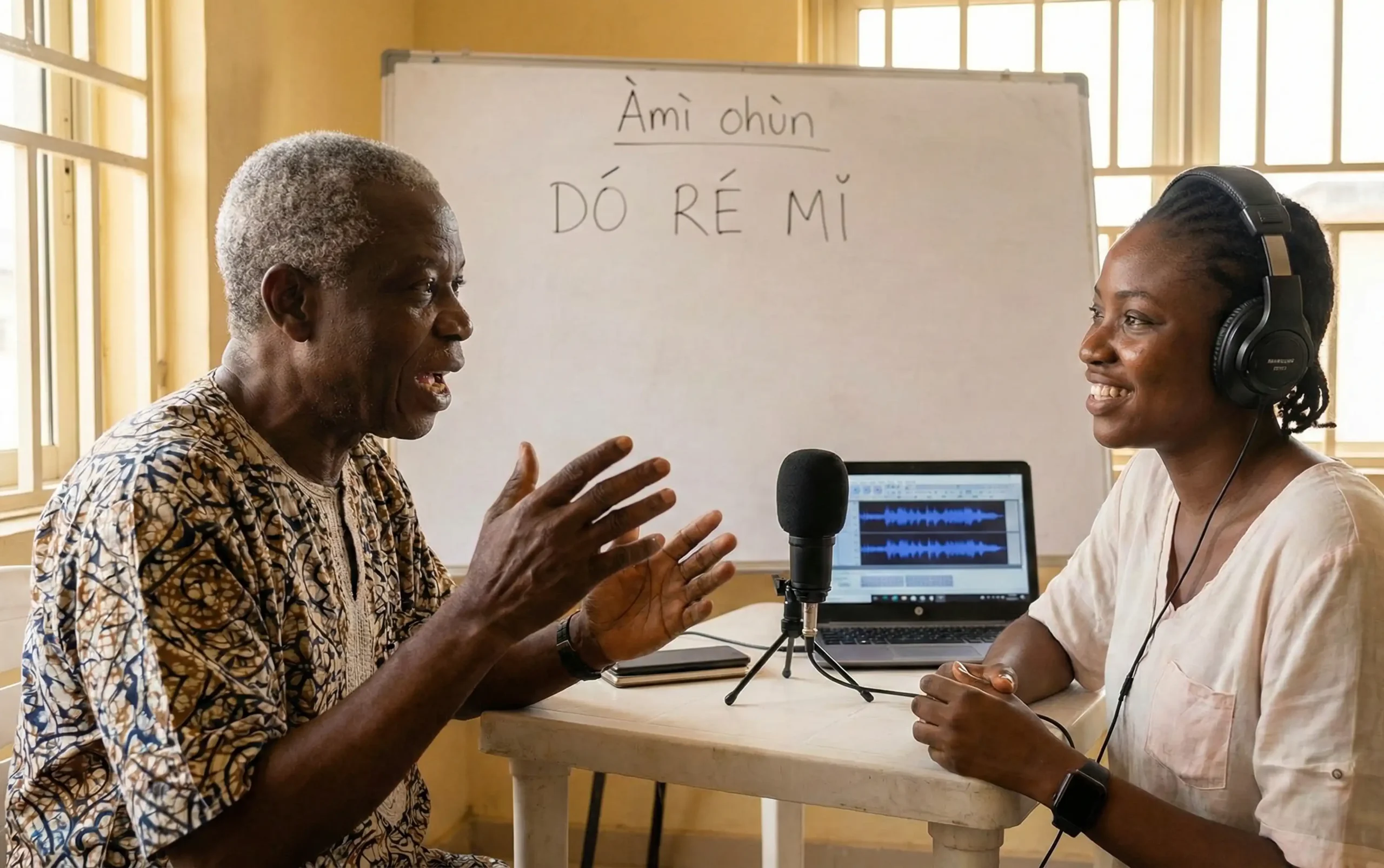
One of the biggest challenges people face when learning Yoruba is pronunciation and tone. You can know many Yoruba words, but if your tone is wrong, the meaning will change, or people may struggle to understand you. This is not because you are not smart. It is simply how the Yoruba language works.
As native Yoruba speakers, we learn tone naturally from childhood. For learners, it takes practice and the right approach. The good news is this. Yoruba pronunciation and tone can be improved, step by step, if you learn it the right way.
This guide will help you understand tone better and show you simple, practical tips that native tutors use when teaching learners.
Yoruba is a tonal language. This means that the pitch of your voice changes the meaning of a word.
For example, the same spelling can mean different things depending on how you say it. A small change in tone can turn a word into something completely different.
This is why people sometimes laugh or look confused when learners speak. It is not mockery. It is because the tone changes the meaning.
Once you accept that tone is part of the language, not a special rule, learning becomes easier.
Yoruba has three basic tones:
You don’t need to call them names all the time. Just know how they sound.
High tone sounds like your voice is going up.
Mid tone sounds calm and level.
Low tone sounds like your voice is going down.
Native speakers don’t think about tone rules when they speak. They feel it. As a learner, your goal is to train your ear to feel it too.
Many learners want to speak immediately, but pronunciation improves faster when you listen first.
Spend time listening to:
Don’t just listen to words. Listen to the music of the language. Yoruba flows like a song. When you listen carefully, your mouth will naturally follow.
This step is very important. Good pronunciation starts from the ear, not the mouth.
Once you have listened enough, start repeating.
Choose one word or sentence at a time. Say it slowly. Don’t rush.
For example:
It is better to say one word correctly than to rush ten words wrongly.
Native tutors always advise learners to slow down. Speed comes later. Accuracy comes first.
Pronunciation improves faster when words are learned inside sentences.
When you learn a word alone, you may not fully understand its natural tone. But when you hear it inside a sentence, the tone becomes clearer.
For example, a word may sound one way alone but slightly different in a sentence. This is normal in Yoruba.
Always ask yourself, how is this word used in real speech?
This may sound funny, but it works.
Some native tutors tell learners to:
This physical movement helps your brain connect tone with sound. After some time, you won’t need the movement again.
Tone is not just sound. It is rhythm.
One of the fastest ways to improve pronunciation is recording yourself.
Say a sentence. Record it. Then listen to a native speaker saying the same sentence. Compare both.
You will notice:
At first, it may feel uncomfortable, but it helps a lot. Many learners improve quickly once they hear themselves.
Fear is a big problem for learners.
Some people avoid speaking because they are afraid of getting tone wrong. But silence will not improve your pronunciation.
Native Yoruba speakers understand that learners will make mistakes. What matters is effort and willingness to learn.
Speak boldly. Correct yourself when needed. Progress comes from practice, not perfection.
Yoruba has patterns that repeat often.
For example:
You don’t need to memorize grammar rules. Just notice patterns.
The more you hear and repeat these patterns, the more natural your speech becomes.
This is one of the most enjoyable ways to learn tone.
Yoruba songs carry correct pronunciation naturally. When you sing along, your tone improves without stress.
Choose:
Singing trains your ear and mouth at the same time.
When a native speaker corrects your pronunciation, don’t feel bad. Correction is care.
Ask questions like:
Native tutors are patient because they know Yoruba tone is difficult for learners.
Correction is a gift.
Consistency is more important than long study sessions.
Ten minutes of daily listening and repeating is better than two hours once a week.
Your mouth and ear need regular training. Small effort every day brings steady improvement.
English tone and Yoruba tone are not the same.
In English, tone often shows emotion. In Yoruba, tone changes meaning.
If you speak Yoruba with English tone habits, your pronunciation will sound strange.
Try to think in Yoruba sounds, not English sounds.
Yoruba pronunciation and tone take time. Even learners who try hard may struggle at first.
That is normal.
Every correct word you say is progress. Every mistake you fix is growth.
Fluency does not come overnight. It comes step by step.
Improving your Yoruba pronunciation and tone is not about talent. It is about listening, patience, and practice.
Listen carefully. Speak slowly. Learn from correction. Practice daily. Enjoy the process.
With time, your ear will adjust, your mouth will follow, and Yoruba will start to flow naturally.
When that happens, you will not just speak Yoruba. People will understand you clearly. And that is the real goal.
Share Post On:
Get the latest Yoruba learning resources delivered to your inbox