11 min read · For Nigerian parents and adults raising the next generation abroad
QUICK ANSWER Nigeria has three major languages with strong diaspora communities: Yorùbá (50M+ speakers, southwest), Igbo (30M+, southeast, flagged by UNESCO as endangered), and Hausa (70M+, including second-language, north and across West Africa). For diaspora families, choosing which to teach a child depends on heritage, family connection, and what structured learning is available where you live.
Table of Contents
There is a moment most Nigerian parents in the diaspora recognise. The child says something funny in English and an aunty laughs and replies in Yorùbá or Igbo or Hausa — and the child looks blank. The parent tries to translate. The aunty gives that look. The child shrugs.
That moment, repeated across thousands of families in London, Houston, Toronto, and beyond, is what language loss actually looks like. It does not happen all at once. It happens through a thousand small moments where the heritage language was not there.
This guide is for Nigerian families navigating that question — for the parents weighing whether to teach their children Yorùbá, Igbo, or Hausa, and for the adults reconnecting with their own. It covers what each language is, who speaks it, why it matters, and how to actually start.
Why Nigerian Languages Are Disappearing in the Diaspora
Heritage language loss across generations is one of the most documented patterns in diaspora research. Across virtually every immigrant community studied — Chinese in the US, Spanish in the UK, Korean in Australia — the pattern is the same: by the third generation, the heritage language is mostly gone, surviving in fragments of food vocabulary and family greetings.
Nigerian families abroad are not exempt. The Harvard Immigration Initiative documents the same pattern across multiple ethnic groups: the moment children enter formal schooling in the dominant language, the home language begins to shift. English takes over the classroom, the playground, the screens. By age ten, many heritage languages have become passive — understood but not spoken.
The drivers are structural. Children spend most of their waking hours in environments where Nigerian languages are not used, modelled, or rewarded. Parents code-switch into English because it is faster and the child responds in English anyway. Grandparents who would once have provided constant exposure live thousands of miles away.
The cost is rarely measured. But the same body of research shows that heritage language proficiency is closely tied to ethnic identity, self-esteem, and the ability of children to feel grounded in who they are. A child who cannot speak with their grandmother loses more than a conversation.
This is the backdrop. The good news is that the pattern is not inevitable. Diaspora communities — Lithuanian, Mandarin, Korean, Spanish — that have built structured weekend schools and online programmes have measurably slowed the loss. Nigerian families now have access to the same kind of structured learning, online and worldwide. The question is which language to start with.
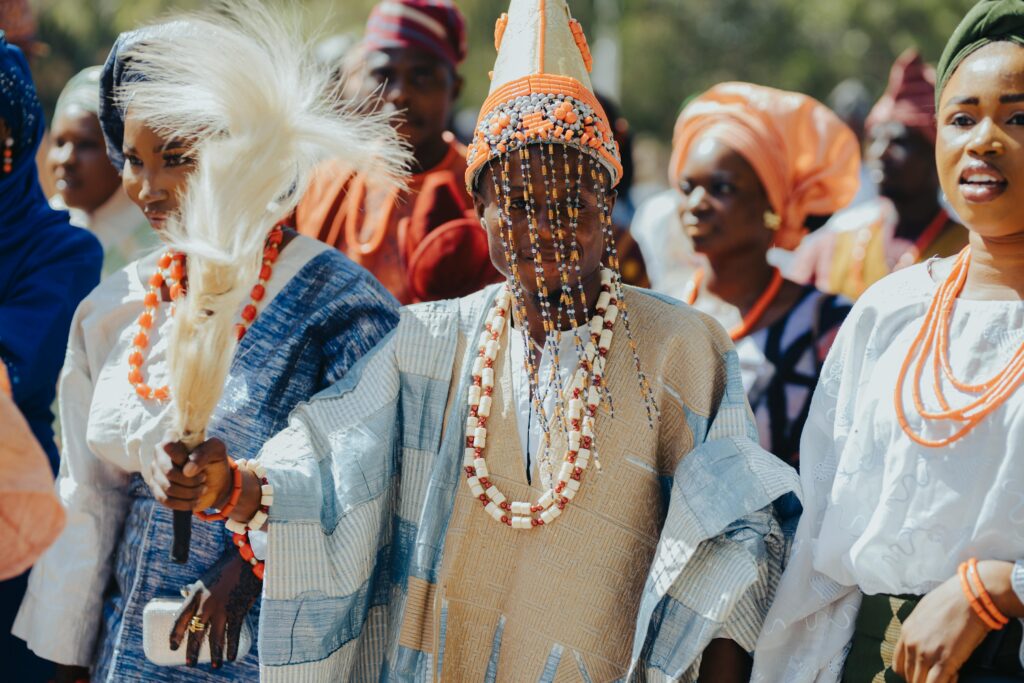
Yorùbá is spoken by roughly 50 million people across southwestern Nigeria, the Republic of Benin, Togo, and migrated communities in Côte d’Ivoire, Sierra Leone, and elsewhere. Major Yorùbá-speaking cities include Lagos, Ibadan, Abeokuta, and Ilorin.
Its global reach is unusual for an African language. Yorùbá liturgical vocabulary is preserved in Cuban Santería, Brazilian Candomblé, Trinidad Orisha worship, and other Afro-diaspora religions that crossed the Atlantic during the slave trade. Names like Ṣàngó, Ọ̀ṣun, and Yemọja are recognised by millions of practitioners who never learned conversational Yorùbá. The cultural figure of Èṣù — frequently misrepresented in Western religious traditions — is one of many reminders that Yorùbá culture is far larger than its native-speaker map suggests.
Linguistically, Yorùbá is tonal. It has three tones (high, mid, low), uses the Latin alphabet with three additional letters (ẹ, ọ, ṣ) and tone-marking diacritics, and follows a subject-verb-object word order familiar to English speakers. Its grammar is in many ways simpler than European languages — no gender, no articles — but its tonal system requires real ear training.
Diaspora demand for Yorùbá learning has grown sharply in the last decade, driven primarily by Nigerian-American, Nigerian-British, and Nigerian-Canadian families wanting their children to retain their identity. The community-led cultural traditions around Yorùbá twins (ìbejì), naming ceremonies, and proverbs are among the most actively preserved among diaspora families seeking to teach their children.
Igbo: The Language of Southeast Nigeria
AT A GLANCE Speakers: ~30+ million · Region: Southeast Nigeria (7 states) · Family: Niger-Congo · Status: Flagged endangered by UNESCO
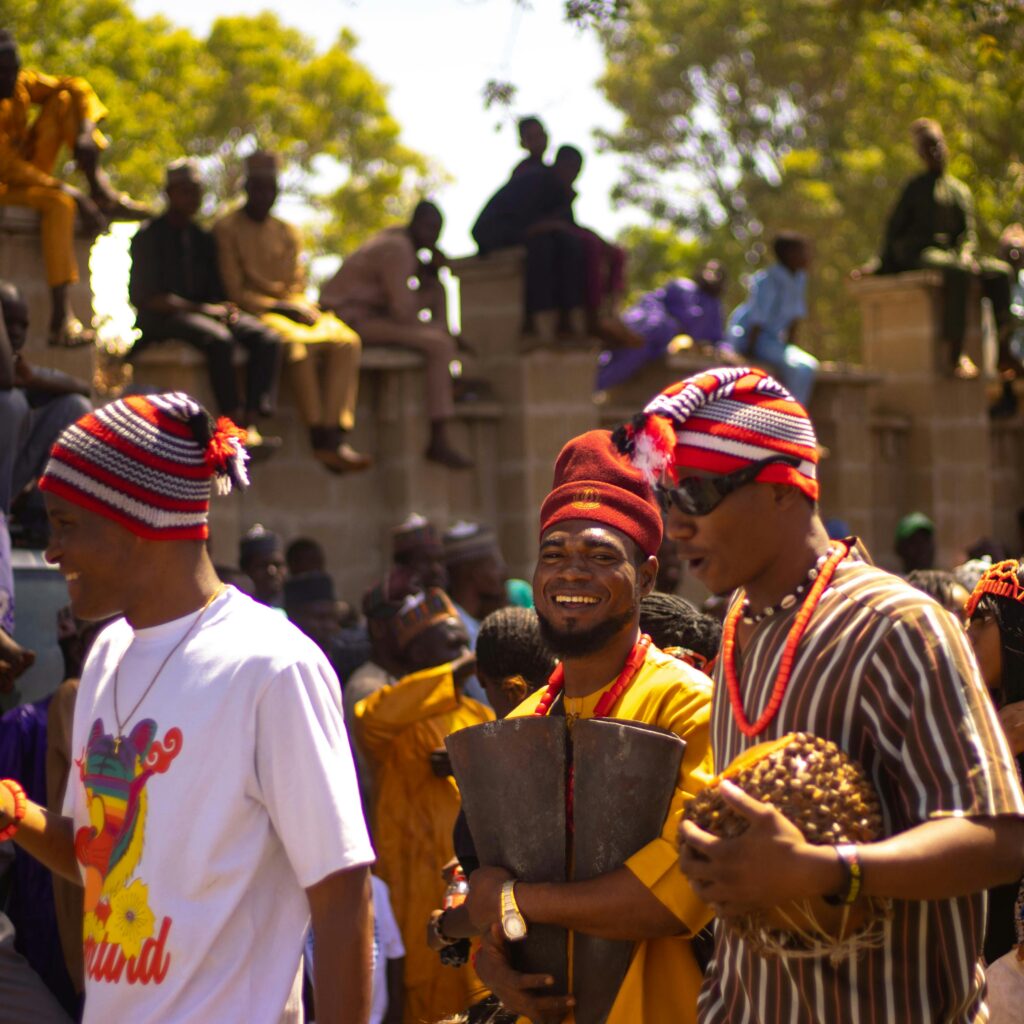
Igbo is spoken across seven Nigerian states — Abia, Anambra, Ebonyi, Enugu, Imo, Rivers, and Delta — by an estimated 30 million or more native speakers. It belongs to the same Niger-Congo family as Yorùbá but is structurally distinct, with different tones, different consonant patterns, and a separate orthography that includes vowels with subdots (ụ, ọ, ị) and the nasal letter ṅ.
Igbo carries a heavier weight than the speaker numbers alone suggest. A 2006 UNESCO report warned that Igbo could face extinction within fifty years if intergenerational transmission did not improve — a prediction that ignited debate but reflected a real pattern. Researchers have documented declining proficiency in younger speakers, both inside Nigeria and abroad, and a measurable shift away from Igbo as the home language in many diaspora households.
Some of this has historical roots. The aftermath of the Nigerian Civil War (1967–1970) created a generation that, in some Igbo families, saw English as a path to economic and physical safety. That instinct travelled with the diaspora. Today, many second- and third-generation Igbo children abroad understand fragments of the language but cannot hold a conversation in it.
The Igbo diaspora is one of the largest and most economically active African diasporas in the United States, the United Kingdom, Germany, and Canada. The Igbo cultural footprint also reached the Americas through the slave trade, including in Cuba, where Igbo vocabulary persists in the rituals of the Abakuá society. The cultural appetite for revival is real — what has been missing in many places is structured, accessible online instruction designed for diaspora households.
That gap is exactly what Alámọ̀já Languages is being built to close.
Hausa: The Language of Northern Nigeria and Beyond
AT A GLANCE Speakers: ~70M+ (incl. second language) · Region: Northern Nigeria, Niger, across West Africa · Family: Afro-Asiatic (Chadic) · Tonal: Yes
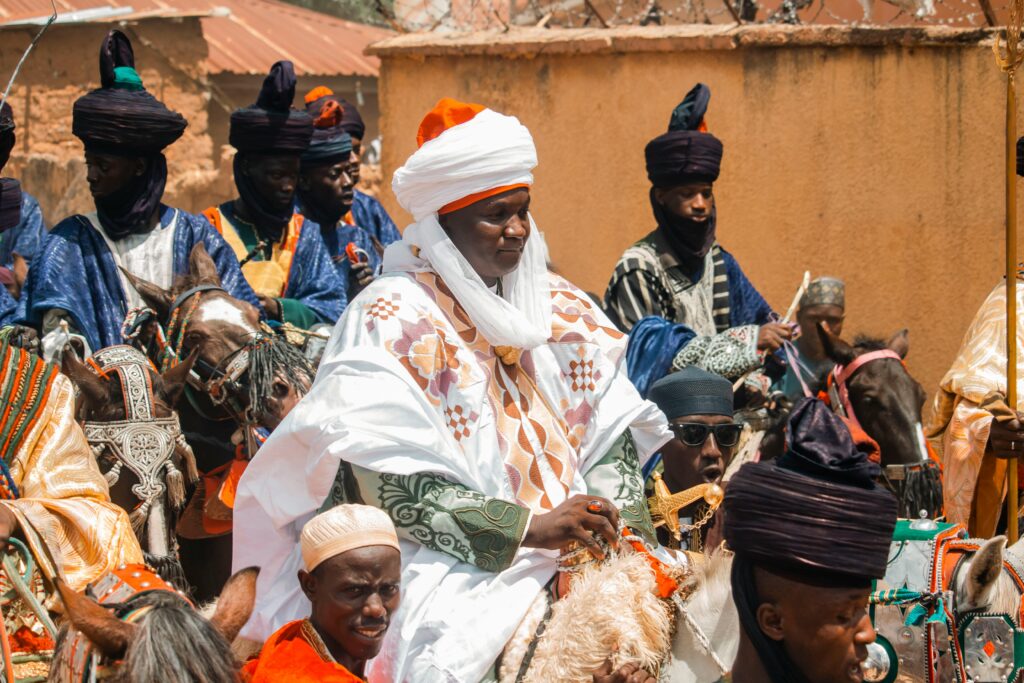
Hausa is the largest African language by total speakers if you count both first and second-language speakers — somewhere between 70 and 80 million across West and Central Africa. Britannica describes it as the most important indigenous lingua franca in West and Central Africa, spoken across Nigeria, Niger, Ghana, Cameroon, Chad, and parts of Sudan.
Structurally, Hausa is different from Yorùbá and Igbo. It belongs to the Afro-Asiatic family — the same broad group as Arabic and Hebrew — through its Chadic branch. It is tonal and uses a Latin-based script (Boko) standardised in the early twentieth century, alongside an older Arabic-based script (Ajami). Its grammar uses subject-verb-object word order and includes complex morphology around plurals and verb forms.
Hausa’s diaspora story is shaped by its lingua franca status. Many Hausa-speaking diaspora families abroad include not only ethnic Hausa speakers from Northern Nigeria but also second-language Hausa speakers from Niger, Chad, and Cameroon — communities where Hausa is the language of trade, religion, and inter-ethnic communication. Major broadcasters including the BBC, Voice of America, and Deutsche Welle maintain dedicated Hausa-language services, reflecting the global weight of the language.
For diaspora families with Northern Nigerian roots, Hausa carries the same heritage language stakes as Yorùbá or Igbo. For families across the broader Sahel, it carries the additional weight of being the regional language that connects communities across borders — which makes its preservation a question that extends beyond ethnicity.
Choosing the Right Language for Your Family
This is not a marketing decision — it is a family one. There is no universal answer to which Nigerian language a diaspora family should prioritise. There are, however, four honest questions worth working through together.
1. What is your family’s heritage?
This is the first and usually the strongest signal. If your parents are Yorùbá, your child’s most useful link to your extended family is Yorùbá. If you are Igbo, the same logic applies. Heritage is not the only consideration, but for most families it is the anchor.
2. What language does your child hear when they visit Nigeria?
Practical exposure matters. If your visits home centre on a grandmother who speaks only Hausa, that is the language of belonging in your child’s lived experience. If extended family conversations happen in Yorùbá, that is the language they need to understand to be present in the room. Choose for what your child will actually encounter.
3. Are both parents from the same language community?
Mixed-language Nigerian families face a different question. Many choose to focus on one heritage language deeply rather than two superficially. Others alternate. Some include both grandparents’ languages with structured help. There is no wrong answer, but the choice is rarely accidental — and the earlier the family makes it, the better the outcomes tend to be.
4. What structured learning is available?
This is the practical filter. A language with no accessible online programme will be much harder to teach a child consistently than one with a structured school. Right now, Yorùbá has the deepest online infrastructure of the three for diaspora families. Igbo programmes are growing. Hausa structured online instruction is still building. The honest answer is that learning options shape what is realistically possible — which is partly why the next section matters.
Yorùbá
Igbo
Hausa
Total speakers
~50 million
~30+ million
~70M+ (with L2)
Primary region
Southwest Nigeria, Benin, Togo
Southeast Nigeria (7 states)
Northern Nigeria, Niger, West Africa
Language family
Niger-Congo
Niger-Congo
Afro-Asiatic (Chadic)
Tonal
Yes (3 tones)
Yes
Yes
Diaspora reach
Strong: US, UK, Canada, Brazil, Cuba
Strong: US, UK, Germany, Canada
Broad: West Africa, UK, US (smaller)
Endangerment status
Stable but declining among youth
Flagged endangered (UNESCO)
Stable (large, growing)
Online learning availability
Strongest of the three
Growing
Limited (still building)
How to Get Started With Structured Learning
Once a family has chosen a language, the question becomes execution. The pattern that works for diaspora language preservation is well-documented and surprisingly consistent across communities — Mandarin Chinese weekend schools, Korean church-based programmes, Spanish dual-immersion classrooms — and it boils down to four ingredients.
Structured weekly instruction. A scheduled lesson with a trained instructor, weekly, for at least six months. Not occasional. Not optional.
Daily exposure between lessons. Audio, music, video, conversation at home — even fifteen minutes a day matters more than a long Saturday session alone.
A community of other learners. Children especially need to see other children doing the same thing. It normalises the work and provides peer motivation.
Adult buy-in. If the parents are not learning alongside the child, or at least supporting the routine, the child stops within months. Heritage language transmission is a household project, not a child’s homework.
For Nigerian diaspora families, the structured online options used to be thin. That has changed. Alámọ̀já Languages is a multi-language platform building exactly the kind of structured, online, diaspora-focused infrastructure these languages need. Yorùbá programmes — including the Yorùbá Beginners School, Yorùbá Club for Kids, Personalised Classes, and Reading School — are available now. Igbo and Hausa programmes are on the 2026 roadmap.
If your family is Yorùbá, you can begin today. If you are Igbo or Hausa, the most useful thing you can do is start the daily home exposure now and join the waitlist for structured programmes as they launch.
Frequently Asked Questions
How many languages are spoken in Nigeria?
Nigeria has more than 500 living languages, making it one of the most linguistically diverse countries in the world. Three are recognised as major national languages: Yorùbá, Igbo, and Hausa. English remains the official language used in government, education, and most formal communication.
Which Nigerian language is most useful to learn?
Usefulness depends entirely on context. For ethnic and family connection, the answer is your heritage language. For travel and trade across West Africa, Hausa has the broadest reach. For cultural and religious connection across the Atlantic diaspora, Yorùbá has the deepest global footprint. There is no neutral “most useful” — only most useful for your family.
Are Yorùbá, Igbo, and Hausa related to each other?
Yorùbá and Igbo are both part of the Niger-Congo language family, but they are not mutually intelligible — speakers of one cannot understand the other without learning it. Hausa belongs to a different family entirely (Afro-Asiatic, Chadic branch), making it more distantly related to Arabic than to Yorùbá or Igbo. The three languages are linguistically distinct.
Is Igbo really endangered?
UNESCO flagged Igbo as endangered in a 2006 report, projecting potential extinction within 50 years if transmission patterns did not improve. The prediction has been contested, but the underlying pattern — declining child fluency in many Igbo households both in Nigeria and abroad — is well documented. Active community-led revival efforts and online learning programmes are working to reverse the trend.
Can a child learn more than one Nigerian language at once?
Yes, but with caveats. Bilingual and multilingual acquisition is well-supported by research, and many children grow up fluent in multiple languages. However, structured learning is harder to maintain across two heritage languages simultaneously. Most diaspora families succeed by anchoring deeply in one heritage language first, then adding others as the child grows.
What if my child only understands but does not speak?
This is called receptive bilingualism, and it is extremely common in second-generation diaspora children. The good news is that the foundation is already there — the child has the sounds, the vocabulary patterns, and the cultural intuition. With consistent structured practice and supportive home environment, receptive understanding can be built into active speaking, often faster than learning from zero.
Key Takeaways
Three Nigerian languages dominate the diaspora conversation, each with its own profile, its own diaspora pattern, and its own urgency.
Yorùbá is the most globally networked of the three, with strong diaspora demand and the deepest current online learning infrastructure.
Igbo carries the most acute preservation urgency, with active community-led revival efforts pushing back against documented decline.
Hausa is the largest by total speakers and functions as a regional lingua franca, with diaspora communities spanning multiple Sahel countries.
Heritage language loss is structural, not accidental — and the only thing that reliably reverses it is structured, consistent learning supported at home.
Choose the language that fits your family’s heritage, exposure, and reality — not what looks most prestigious online.
The hardest part of preserving a heritage language is not the language itself. It is the decision to begin, made deliberately, before another year passes.
START WHERE YOU ARE Explore Alámọ̀já Languages — the multi-language platform building structured online instruction for Nigerian diaspora families. Yorùbá programmes are live now via Alámọ̀já Yorùbá. Igbo and Hausa programmes are on the 2026 roadmap.